Sensor Fusion
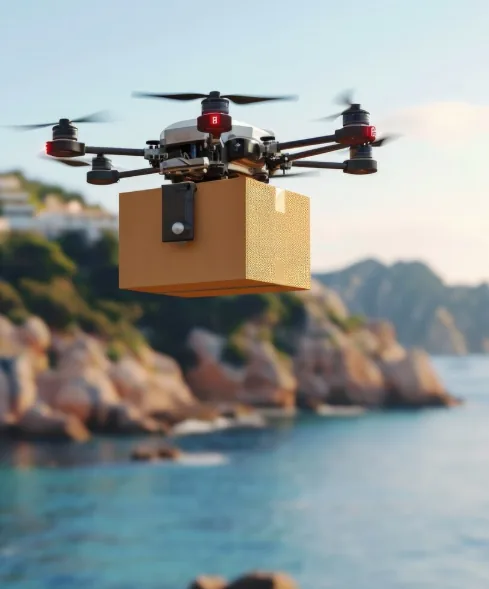
Modern drone delivery platforms rely on an array of sensors to perceive their surroundings. LiDAR, thermal cameras, and ultrasonic rangefinders work in unison under demanding conditions. This sensor fusion is the perceptual backbone of any safe autonomous delivery mission. Redundant data streams ensure that unmanned logistics vehicles detect obstacles with high confidence. Every new generation of delivery technology pushes the resolution and range of these systems further.
Real-time processing of sensor data demands powerful but energy-efficient onboard computers. A delay of milliseconds in object classification could compromise an autonomous delivery flight. Engineers developing future delivery hardware optimize neural networks for edge computing constraints. This local intelligence is central to the reliability of advanced unmanned logistics. Sensor-driven algorithms give a drone delivery machine the situational awareness once reserved for human pilots.
Adverse weather tests the limits of delivery technology sensors every season. Heavy rain, fog, and snow scatter LiDAR beams and obscure visual cameras. Researchers address this by training autonomous delivery perception models on multi-spectral datasets. The goal is all-weather drone delivery capability that matches the robustness of conventional transport. Improving sensor resilience remains a primary frontier for unmanned logistics innovation.
Beyond obstacle avoidance, sensors enable precise landing on dynamic platforms. A moving vehicle or a swaying ship deck presents a complex target for future delivery systems. Optical flow sensors combined with real-time kinematics guide the final approach of a drone delivery unit. Such precision expands the potential use cases for unmanned logistics in defense and maritime supply. The sophistication of delivery technology landings is a testament to sensor evolution.
Weight and form factor trade-offs constantly challenge autonomous delivery sensor design. Every gram added to a perception suite reduces the payload capacity for the drone delivery task. Miniaturization of delivery technology components is therefore a hotbed of materials science research. The future delivery ecosystem innovates by shrinking high-performance sensors without sacrificing accuracy. Streamlined arrays will define the next generation of agile unmanned logistics vehicles.
Sensor data also feeds into the predictive maintenance algorithms for drone delivery fleets. Vibration patterns and thermal signatures indicate when a component within an autonomous delivery craft might fail soon. This proactive approach to unmanned logistics maximizes fleet availability and safety. Analytics applied to delivery technology output transforms raw signals into operational intelligence. The result is a self-monitoring future delivery system with drastically reduced downtime.
Interoperability standards among sensor manufacturers are evolving to benefit unmanned logistics. Plug-and-play perception modules would allow rapid upgrades to drone delivery platforms. An open architecture for autonomous delivery sensors encourages innovation and cost reduction. This modular delivery technology philosophy aligns with the industry’s fast iteration cycles. Seamless hardware interchangeability will accelerate the global scale-up of future delivery services.