Rural Reach
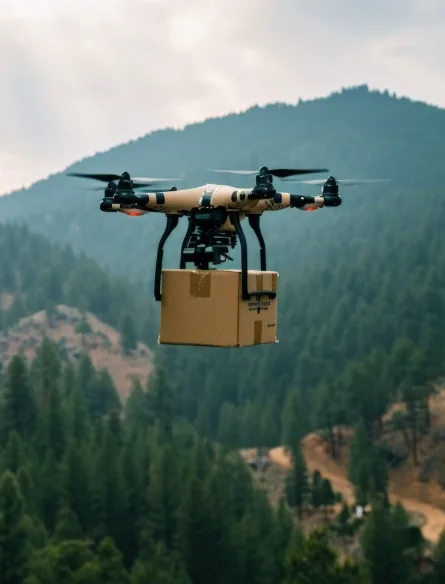
Remote communities stand to gain the most from the deployment of reliable drone delivery. In mountainous regions of Japan, conventional trucks struggle with narrow roads and seasonal closures. An autonomous delivery network can maintain steady supplies of essential goods regardless of ground conditions. This approach redefines the concept of future delivery for populations underserved by traditional logistics. Lightweight delivery technology bridges the physical isolation that has persisted for generations.
Medical access improves dramatically when unmanned logistics is introduced to island territories. Prescription medications and diagnostic samples travel via drone delivery in a fraction of the usual time. Temperature-sensitive payloads are protected by advanced compartments within these autonomous delivery vehicles. Local clinics gain near-instant connectivity to central hospital laboratories through this delivery technology. Such applications highlight the humanitarian core of the future delivery movement.
Agricultural producers benefit directly from on-demand drone delivery of spare parts. When a tractor breaks during harvest, waiting days for a component is not viable. An autonomous delivery system can transport the required item from a regional hub within hours. This just-in-time capability is a game-changing facet of unmanned logistics for the primary sector. The reliability of delivery technology in farming areas boosts overall rural economic resilience.
Infrastructure costs for ground-based future delivery are often prohibitive in low-density zones. Drone delivery eliminates the need for continuous road maintenance to every remote settlement. Sky-based autonomous delivery routes require only minimal ground stations for charging and loading. This capital-efficient model makes advanced unmanned logistics attractive for municipal planners. By leapfrogging traditional infrastructure, delivery technology offers a sustainable rural development path.
Seasonal disasters often sever ground links to mountain villages without warning. Pre-positioned fleets ready for drone delivery become emergency lifelines in such scenarios. These autonomous delivery units can carry communication relays, water test kits, and first-aid supplies. The rapid response potential of unmanned logistics fundamentally alters disaster preparedness calculus. Integrating weather-hardened delivery technology into civil defense plans saves lives.
Education materials and remote learning kits arrive via drone delivery in isolated districts. Students gain timely access to library resources through scheduled autonomous delivery drops. This future delivery model for knowledge ensures that geography no longer dictates educational opportunity. Lightweight delivery technology thus supports intellectual as much as physical well-being. Equal access to learning is an indirect but profound benefit of unmanned logistics.
Preserving cultural continuity also features in rural unmanned logistics conversations. Elders can receive traditional craft materials via drone delivery without traveling to city markets. Autonomous delivery helps sustain intangible heritage by facilitating the flow of culturally specific goods. Delivery technology here supports community identity rather than mere consumerism. The narrative of future delivery expands to encompass social and cultural connectivity.